
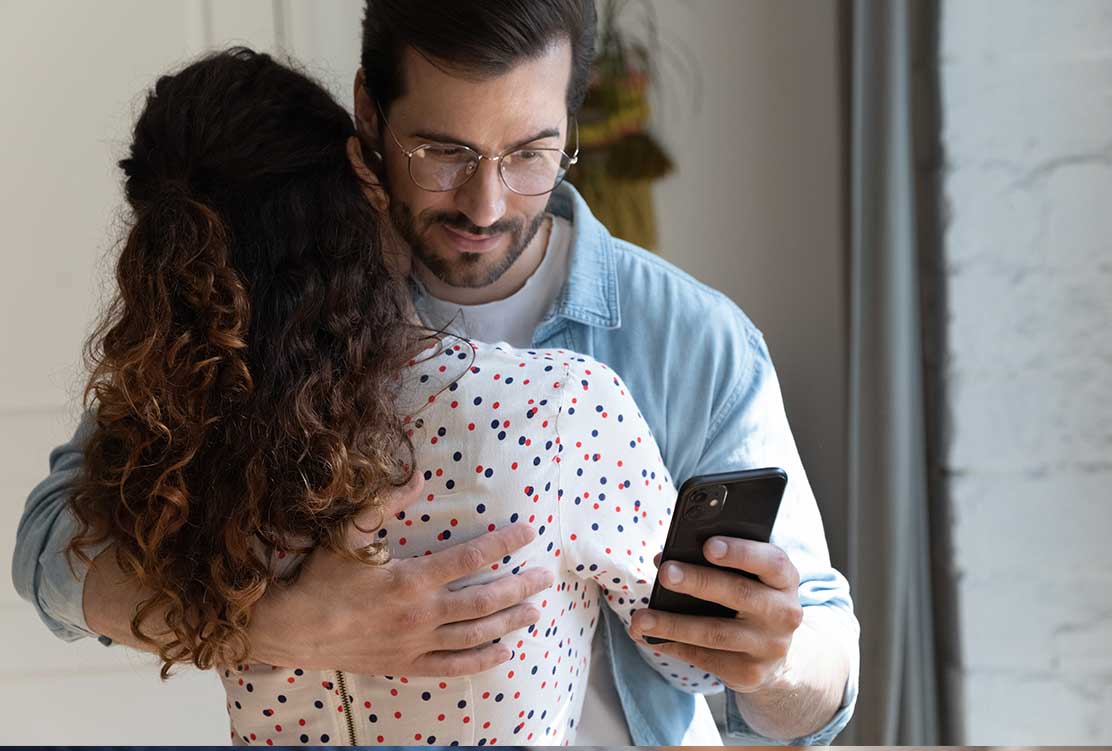
A lot of men believe that looking at women online is harmless as long as they are not physically cheating. They convince themselves that because it happens on a phone, it does not count. They say it is just a like, just a scroll, just a profile, just a video, or just a habit. But the truth is that what a man repeatedly looks at becomes part of what he desires, and what he desires begins to affect how he treats the woman in his real life.
The hidden cost of looking at other women online is that it divides attention. A girlfriend or wife wants to feel chosen, not compared. She wants to feel safe, not secretly measured against strangers. She wants to feel respected, not placed in competition with images, models, influencers, or women selling their bodies for attention. When a man continues to look at other women online while claiming to love the woman in front of him, he sends a painful unspoken message: my attention is not fully yours.
That message can hurt deeply. Many women may not say it at first because they do not want to seem insecure, controlling, or dramatic. But inside, they may feel embarrassed, rejected, or not enough. They may wonder why their partner needs to look elsewhere. They may begin comparing themselves to women online. They may question their body, their beauty, their value, and their place in the relationship. What feels casual to the man can feel like betrayal to the woman who is trying to trust him.
This habit also creates problems for the man that he may not recognize right away. It lowers his ability to be satisfied. Social media gives him endless options, endless images, and endless novelty. Real love cannot compete with endless novelty because real love is not supposed to be a performance. Real love is a commitment. It is built through patience, sacrifice, affection, protection, honesty, and presence. If a man keeps training his mind to chase new images, he can start becoming restless inside the very relationship he should be building.
Over time, he may become less grateful. Instead of seeing the good in his partner, he starts noticing what is missing. Instead of appreciating her loyalty, care, personality, humor, support, and love, his mind becomes distracted by surface-level comparison. That comparison is unfair because online content is edited, posed, filtered, selected, and designed to trigger attention. He is comparing real life to a manufactured image.
This is how a subtle online habit can create very real conflict. The woman feels hurt. The man feels accused. He defends himself because he thinks it is not a big deal. She pushes harder because she feels disrespected. Then the relationship becomes filled with arguments about phones, likes, follows, private messages, search history, and secrecy. What started as looking becomes mistrust. What started as scrolling becomes emotional distance.
A man has to understand that loyalty is not only physical. Loyalty is also mental, emotional, and visual. Where a man allows his attention to go matters. If he is constantly feeding attraction outside the relationship, he is weakening the attraction and connection inside the relationship. If he keeps giving his curiosity, desire, and admiration to strangers online, he should not be surprised when his partner feels less secure with him.
There is also a dignity issue. Women online are not just images. They are people. When a man consumes women as content, it can slowly train him to objectify instead of respect. That mindset can affect how he views all women, including the woman he claims to love. A man who wants to build a strong home must learn to see women with dignity, not through constant sexual evaluation.
The solution begins with taking responsibility instead of making excuses. Stop saying, “It is just social media,” if it is creating pain in your relationship. Stop calling your partner insecure when your behavior is giving her reasons to feel unsafe. Stop pretending that your private habits have no effect on your public life. A man who wants peace, love, and respect in his home must be willing to remove the things that weaken those values.
Practical changes matter. Unfollow women you follow for lust. Stop liking sexualized or body-focused posts. Remove apps or accounts that pull you into comparison. Keep your phone use honest. Talk with your partner about what online respect looks like. Create standards together. Build a relationship where both people feel protected, not exposed to constant outside competition.
If this article is uncomfortable, that may be a sign to look closer. Not with shame, but with honesty. Ask yourself: what is this habit costing me? Is it damaging her trust? Is it lowering my standards? Is it weakening my self-control? Is it making me less present, less grateful, or less loving? Am I protecting the woman I am with, or am I asking her to tolerate behavior that slowly hurts her?
Take the next step today. Learn more about human dignity, respect, and treating others as more than objects or images here: https://www.scientology.org/how-we-help/human-rights/
You can also study principles connected to responsibility, family, and strengthening the fabric of society here: https://www.scientology.org/how-we-help/way-to-happiness/fabric-of-society.html
A better relationship requires better attention. A stronger marriage requires stronger discipline. Love is not just what a man says. It is what he protects, what he avoids, what he chooses, and what he refuses to let into his home. If you want a healthier life, start by protecting your eyes, your mind, your woman, and your relationship from the small habits that create bigger problems than you realize.